
New Thinking about Israeli National Security in a Changing Regional Environment
Maj. Gen. Yair Golan*, Israel Defense Forces
2017 Zeev Schiff Memorial Lecture
The Washington Institute for Near East Policy September 7, 2017
ROBERT SATLOFF: Good afternoon and welcome to The Washington Institute. I hope you’ve all had a restful summer, because I think autumn’s going to be a pretty busy time of year. And that’s the first announcement. This event is, like most Washington Institute events, being Livestreamed. You are very welcome to tweet to your heart’s desire, but I’d appreciate it if you did it on mute, with your phones. This is the tenth anniversary of the passing of Zeev Schiff, this year. The Institute was proud to establish an annual lecture in honor of Zeev, because of Zeev’s unique persona, his unique role, his unique character, and his unique contributions to our work—but, more generally, to the relationship between the United States and Israel. Ten years is a long time. I think it’s fair to say that in those ten years, gone from the Israel Defense Forces (IDF) are just about all the generals who used to leak to Zeev. [Laughter] I think in the past ten years, gone are most of the secretaries who fell for Zeev’s charms and enabled him to get a lot of those leaks from their supervisors. I think in those ten years, quite a few of the readers of Israeli newspapers have become inured to the idea that they won’t open up the front page of what claims to be Israel’s New York Times and see outstanding, independent national security analysis. Ten years is a long time.
When I sent out invitations to today’s event to a number of people, I got a few responses, most of which—or almost all of which—were along the lines of, “My gosh, what would Zeev say today?” And, as Sarah and Hadar and Eyal know very well, the one word that would come to mind is, of course, “unbelievable.” Unbelievable. Yes, we have fake news today—but we have to remember fake news is nothing new. The Soviets were experts at fake news against Israel decades ago. A story would start out in some obscure Indonesian or Indian newspaper, be picked up by some Hungarian or Czech outlet, find its way into some West European leftist magazine, and, before you know it, it’s in the Guardian, or maybe even in the New York Times. Fake news was not born in 2016.
He would look around and say, “Oh my gosh, are those the Russians in the Middle East again. I thought they left in 1972—but they’re back.” He would look around and say, “How did those Iranians manage to stick their militias on the border with Israel. That one is a new development. That’s a scary change.” But perhaps the most serious change in ten years—and something about which he would say “truly unbelievable”—is we’re now about ten years into a national discussion here in the United States about America’s rightful role: whether it’s
appropriate for America to be a leader or whether we’re better off letting Middle Easterners solve their own problems without our direct intervention. More than most, Zeev realized the role America plays in Israel’s security—and how Israel’s strategic situation is not just the sum of its tanks, missiles, and airplanes, but the strength of its partnership with the United States and America’s resoluteness in fulfilling its leadership role. So after watching ten years, through multiple administrations, debating that, Zeev would surely say “unbelievable.”
You know, it’s easy to lionize the past—those were the days, make America great again—but the past wasn’t always so great. America’s past isn’t necessarily better than its present or its future. But Zeev is definitely someone from the past worthy for us to remember today: a voice of clarity, of integrity, of insight, of warmth, and of unbridled good humor. Zeev was a proud Zionist, a proud journalist, a proud pursuer of peace through strength, and a proud friend of America. And he found a way to pursue all four of those characteristics in a way that provoked no contradiction, because he made all four of them make sense together. That is something that we are remembering here today. So it’s with great delight that we are hosting this Zeev Schiff Memorial Lecture. And with that, I’ll take a moment to turn the podium over to Zeev’s son, Eyal Schiff.
EYAL SCHIFF: Thank you, Rob. Ladies and gentlemen, Dr. Satloff, the director of The Washington Institute, staff members, General Golan from the Israeli army, and our guests, dear guests, my name is Eyal Schiff. I am the son of Zeev, and I represent, of course, my mother, Sarah, my sister, and the whole Schiff family from Israel. It has been now, as Rob said, a full decade, ten years, from the time that our beloved father, husband, and grandfather passed away at the relatively young age of seventy-five. There is not even one day since then that we do not remember and think of him—being such an exceptional person who touched so many people and friends all around the world, with his unique mixture of wisdom from one side, combined with remarkable sensitivity and warmth to all kinds of friends, people, and family members on the other.
My father was a partner, as far as we know, to the creation and founding of The Washington Institute years ago. He was very active as a member. He used to host delegations and guests from the Institute while visiting Israel and considered, as we know, the Institute as a [inaudible] professional home base for himself. And hence, I am highly excited to be here again at the memorial event which takes place by his American friends year after year—and so far from our hometown in Israel. And we are all much honored by this respectful tradition of The Washington Institute.
Eventually, the political complexities, especially in our area of the world, still exist and have become even more complicated during this decade. And I wish my father could have been here today with us to discuss these issues using his tremendous experience. On behalf of my family, I would like to take this opportunity to thank Dr. Satloff, a friend and a partner of my father, and the director of the Institute, for initiation and launching of this unique tradition…We haven’t got enough words to thank you, Rob, for your sincere efforts and dedication in arranging and holding this wonderful and respectful event in memory of my father year after year for the last decade. I wish you all an interesting discussion and meeting, and a happy, healthy, and secure new year. Thank you. [Applause]
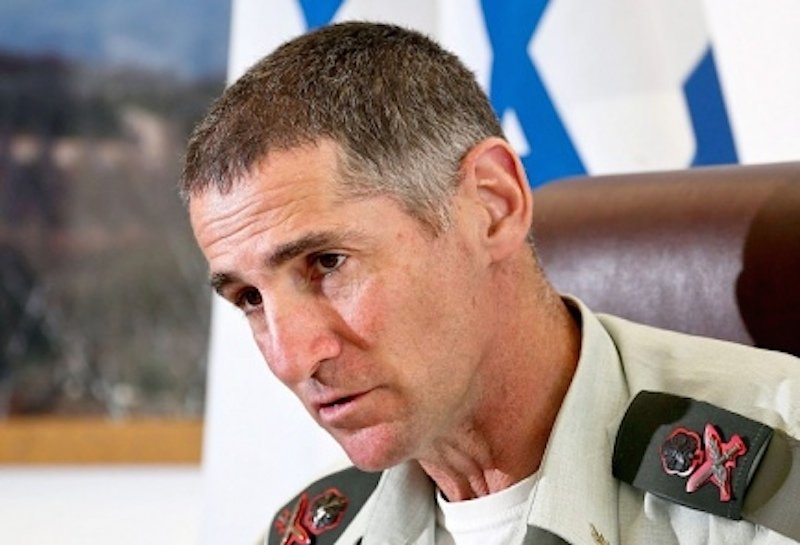
SATLOFF: Thank you very much, Eyal. And I want to thank all the members of the board of trustees of The Washington Institute who have consistently supported this event and made it possible for us to convene it today. And that includes, this year, being able to host a very special event with Maj. Gen. Yair Golan. General Golan only just recently completed his service as deputy chief of staff of the IDF—thirty-seven years in uniform, service in all manner of military tasks and responsibilities, including service on Israel’s Northern
Command, commander of Northern Command, before becoming deputy chief of staff. Yair is an intellect, a doer, an activist, a thinker. It is with great pride that General Golan is a visiting fellow at the Institute for the next six weeks. And he’ll have an opportunity during that time to engage with people here in Washington on a much more intimate level than the one that we’re having today on the entire range of strategic facing our two countries in this part of the world.
But for today, we’re going to have the benefit of him offering his broader view about Israeli defense policy and the challenges that Israel faces. Then, he and I will have the opportunity for a bit of a discussion, back-and- forth. And then we will turn over to your questions and comments. Ladies and gentlemen, I’m delighted to welcome to the podium Maj. Gen. Yair Golan. [Applause]
YAIR GOLAN: Schiff family—Sarah, Hadar, Eyal—distinguished guests, dear friends, it’s a great opportunity and, at the same time, a great obligation for me to be here this afternoon. It’s a great opportunity—well, that’s absolutely clear. I have all kinds of strange ideas in my mind, you know, and I would like to check it with you. And it’s also a great obligation. And why an obligation? Not only because my parents were friends with Zeev and Sarah, not only because my late father and Zeev experienced the same heart disease and went through this painful process at the same time—it’s also because, [aside to Schiff’s family, presumably] and I never told you about it, I owe Zeev Schiff a lot.
I wrote my final paper for the command staff college about the first Lebanon war. And I wrote my final paper for the Army War College—not very far from here, in Carlisle, Pennsylvania—about the first intifada. And guess what? One of the main resources was Ehud Yaari and Zeev Schiff’s books about the respective subjects. And the fact that these books were so well-accepted by academics showed the quality of these books. Because, yes, they were written by two journalists—but both of them are not just journalists. They are scholars. And it was of the highest standards. And I could use it, and I have to say that I learned a lot out of it. So thank you very much.
What I prepared for today is going to disappoint you, unfortunately. You are here, and you are after lunch. There’s no other way. And why is that? Usually, people want me to say a few words about the current situation. I have to tell you something: you know exactly what I know, and the other things I know, I cannot tell. [Laughter] So: I say that, you know, in the most frank way. This afternoon, I wouldn’t like to discuss the situation, although I am ready to answer any questions—and not about the last attack in Syria. That is part of the deal.
When I finished my last assignment as the deputy chief of staff, I was asked by the minster of defense to write Israel’s defense policy. And that’s the reason I am here: to have enough time to write. And I want to share with you some of the ideas that I have concerning this big issue. It’s impossible to deal with Israeli defense policy without mentioning two other issues: the first one is about the vision and the fundamental values of Israel— because everything, including the defense policy, should serve. And the second thing: keep in mind that, in Israel—and I believe the same is true for here in America—defense policy is just part of the national security policy, which is a much wider issue.
So this is the deal: I’m going to say a few words about vision and founding values. I’m going to say a few words about national security policy. And the main chunk of this lecture is about defense policy, which truly represents more the military aspect of national security. Alright? Fair enough?
The main source for the vision of Israel is its declaration of independence. And, in fact, we have five main imperatives in this declaration. You know, we have no constitution in Israel. So I rely on the most fundamental document that really encompasses Israeli thinking. First, Israel is the homeland of the Jewish people. And today I think we have much to discuss concerning that. Secondly, Israel is a Jewish and democratic state. The term “democratic” doesn’t appear there, but it’s written: free, just, and equal state. These are the terms written in the declaration. The third issue is about preserving freedom of religion and accessibility of all holy sites in Israel. Up to now, we can manage, we can control, all three main imperatives. And the other two—well, the fourth one is about being an acceptable member in the region and contributing to the welfare of the region and its prosperity. Well, that’s quite complicated because we cannot do it alone. And the fifth one is about being a welcomed member in the international community.
But these five imperatives are not enough. David Ben-Gurion used to say that there are two things that should be added: the first one is that Israel should keep its intellectual and moral superiority. And, as a supplement to that, Israel should be ohr la’goyim ve chevrat mofet, “a light for the gentiles and an exemplary society.” That’s very hard, very tough. But that was in the mind of David Ben-Gurion. Quite recently, our current president, President [Reuven] Rivlin, added another issue, and this is the idea of the four tribes. President Rivlin thinks that talking today in Israel about Israel as a melting pot for all Jews, for all the people, all the citizens, of Israel, well that’s impossible. It’s irrelevant anymore. So President Rivlin acknowledged that we have four main tribes: the secular tribe, the national-religious tribe, the ultraorthodox tribe, and the Arab tribe. And the challenge here is, although we have differences, we should live together, we should cooperate together, we should share the same values, and we should work together in order to enhance these values. And this is a great challenge. And it’s really fit for a vision. So this is about the vision.
Now, let’s move to the national security policy. Of course, the first who wrote about it is David Ben-Gurion, the founding father. And he mentioned four main things. First of all, and I put it in my words, it’s not his words—first of all, social cohesiveness. And it’s absolutely clear why it’s important. And the second issue: growing an honest economy. The third issue is strategic allies and reasonable foreign affairs. And the fourth one is having a strong military. Quite simple, but these four ingredients, these four pillars, always appeared after two main things: the first was aliyah, observing Jews from all over the world, and the second thing was hityashvut, settling the country. And keep in mind that from 1948 to 1956 more than settlements were established over Israel, mainly along the borders. Keep in mind that Israel was a very poor country during that time. It’s kind of a miracle.
But these two imperatives are not relevant anymore, because in 1948 about 15 percent of the Jewish people lived in Israel. Now we have almost 50 percent. And, of course, settling the country could not be, you know, part of national security today. So what we have instead, also two important imperatives: The first one is about governance—the ability of the official entities of the Israeli government to rule. And I would say that in modern life, you cannot rule just from up to down. You need to work with the citizens, and you need to create some sort of cooperation and mutual relationship in order to get the best out of this relationship. I think the American example for that is very impressive. And the second one, I call it building the people and building the country. Building the people because all over the history of Israel, our main advantage was the human advantage—not natural resources, not wealth, money. It always was around the quality of the people. And this is something we should keep. And building the country—because keep in mind that Israel is one of the most densely populated places on earth. Yes, I know that on the list, we are number thirty-five. But if you take out Monaco, Andorra, San Marino, and, you know, other minor states, we are number thirteen. And if you keep in mind that two-thirds of Israel is the Negev, the southern part, the desert part, then you get that most of the
population is north of Beer Sheva. And today, in the whole land, between the sea and the river, are about 6.5 million Jews—and, you know, you can discuss it, between 5.5 and 6 million Arabs. So it’s not just very dense populations, it’s also very complicated. And we need to build the country together. No other way, no matter what are the boundaries or the borders between Israel and Palestine, between the Palestinian communities and the Jewish communities. So this is about national security policy.
Now let’s move to defense policy—or the military-defensive aspect of national security. I divide it into four different sections. The first one is about the operational policy, or the operational perception, of Israel. It defines the relationship, sometimes the brutal relationship, we have with our enemies. What can you do with your enemies, and what are the possible outcomes of this relationship, violent relationship? The second part is about readiness of the IDF. It’s so important, it’s so crucial, to the existence of Israel. You cannot ignore it. The third part is about building the power—how you build the strict military power of Israel. And the fourth part is about leadership and about the defense apparatus.
Let’s start with the most important part, which is operational perception. Looking at that, it’s a tough issue. First, I’ll try to define what kind of a relationship could we have with enemies—not with friends, only with enemies. First, we need to know about them—about their plans, about their culture, how much they have, fourteen digits of targets, things like that. All levels of intelligence. So this is one way of relationship. The second issue is defending against them. Yes, protecting ourselves—because they have bad intentions toward us, and they prepare to operate against us. That’s the meaning of being enemies. So we have to defend. The third one is about prevention and influence. It’s, kind of, soft uses of power. And the fourth one is, yes, ladies and gentlemen, fighting them.
These cover, in my mind, all possibilities of hostile relationships with your enemies. What are the outcomes of that? We have three. The most desirable one is deterrence. Nothing is better than to deter your enemy because you don’t really need much power. It costs less, and because it costs less, you can do with your money and with your country much better things, like building the country. But as usual in violent relationships, here and there deterrence collapses. So what next? And here, we have something happy to tell you. Once Israel has no other choice but to defeat its enemies, now we don’t have to defeat them because we also can, you know, take the power step by step, slowly, slowly. We call it attrition. Attrition. And it is a possibility for decisionmakers today in Israel. I understood it on the eve of Operation Cast Lead. Then, the minister of defense, Ehud Barak, called us, generals of the IDF, to explain what our plan is. And we showed him—you know, we are going to penetrate the Gaza Strip from here and there, and we are going to conquer Hamas and do all kinds of bad things to Hamas. And I saw his face becoming gray. And after, you know, ten minutes, he started shouting, “No! What are you doing? I have no intention to invest so much, and I have no expectation to get much. This is only Hamas. All I want is a very limited operation.” And guess what? Yes, he is right. It is a possibility. And we cannot anymore come to our political superiors and tell them that there is only one opportunity: to achieve a complete defeat of our enemies, and that’s it. It’s a matter of how much you want to invest and what are your expectations. And there is a third element: how long it’s going to take. It’s about time, investments, and gains. And usually, decisionmakers today should think in these terms.
So, deterrence and attrition and, of course, the third, classic outcome is to defeat your enemy. And sometimes, there is no other option. If I look today at the threat imposed by the “Iranian crescent”—Hezbollah, Shia militias in Syria, Hezbollah in Syria, and Iran, and maybe the Houthis in Yemen, in case of a war, in case they would use all their capabilities against the Israeli population, the IDF wouldn’t have any other choice but to
defeat Hezbollah and other Shia elements, or anyone who fights against us. It all depends upon the level of threat imposed on Israeli infrastructure and Israeli population centers. In this case, there is no other choice.
So this is the first and most important part of the defense policy. I want to say a few words about the other three. We are absolutely determined not to harm anymore the IDF readiness—not anymore. The lesson out of the second Lebanon war, the lesson, in a way, out of the last operation in Gaza, the operation of 2014, the lesson is that we should not compromise the readiness of the military. And the main problem is—and I believe the same is true here in the States—the land forces, because when you deal with land forces, it’s so complicated. Why is it so complicated? Because the future battlefield is going to be more complicated than the one we experienced in the last thirty years. No, it won’t be like the Second World War. It will be easier. But it won’t be like our last experiences in Lebanon and the Gaza Strip. It will be more lethal. It will be always on urban terrain. It will be [subterranean]. It will be with vast uses of unmanned aerial vehicles (UAVs) and cyber. So it’s complicated. And while fighting on urban terrain, you need a very high level of professionalism in the very lower echelons—because every room, every building, is another terrain. And the commander there is supposed to be a squad commander, a platoon commander, a company commander. Young people with not much experience—and we need to train them to be prepared for this challenge. And I believe that this challenge encompasses all military organizations in the Western world.
The third issue is about building the force. Keep in mind that the challenge for Israel today is really huge and unique at the same time. Why? Because, in fact, we need three different militaries. The first one, to cope with any Palestinian revolt in Israel. It’s not a pleasant business, but this is part of the military business. The second one is to find our enemies along the border: Hezbollah, other Shia militias, as I mentioned, Hamas. And the third one—well, this is new. It’s fighting Iran. We cannot allow ourselves not to prepare for direct confrontation with Iran. But we are not the United States of America. We don’t have expeditionary forces. There’s no Marine Corps in Israel. Should we build one? No. It’s way beyond our capabilities. So what should we have? Well, this is a big question. I’m going to write about it. This is the classified part of the paper.
And the fourth pillar is about leadership—defensive leadership. What you can say here is the following: first, keep in mind that the role of the IDF in Israeli society is much larger than the role of any other military in the Western world. In Israel, the IDF is a huge educational system. This—military service, mandatory military service—serves as a last opportunity for the Israeli state to educate its youngest. It’s a very impressive process— and a very tough process at the same time. But we should lead this process, and not lag behind all kinds of currencies in Israeli society. And since we have some disputes in Israeli society, these disputes go straight into the military—and coping with that, well, that’s very delicate, and very complicated.
And the other main issue concerning leadership, I mentioned already. It’s about creating enough of a level of professionalism in very young guys. Very, very complicated. Very complicated here in the United States. Much more complicated with our draft system. Keep in mind that every four months, the IDF takes thousands of young people, well-trained young people, and sends them home—and observes thousands of newcomers and trains them from the very beginning. So it is complicated to keep the right level of professionalism inside Israel.
So, how to conclude this short discussion? The bad news is that I believe that we end an era, the most promising of Israel. Now, you would say, how can you say something like that? You fight all the time. No, it’s not like that. The wars of the last thirty to forty years were quite simple. This is my, you know, own personal biography, and I have to admit it—you know, I am very proud, for example, of my role in Operation Defensive
Shield, 2002. I fought in every major Palestinian city except Jericho. Very proud. But at the same time, I have to admit that it was against a very, very poor enemy. The enemy is not so poor anymore, so this is the bad news.
The good news is that while looking at the Middle East, with all the changes and the turmoil and the unexpected issues, I would say that if you’re looking from a wider angle, well, we should be quite optimistic. With all the faults, with all the problems, I believe that we are on a path of being stronger, more capable, more sophisticated, and more fitted for future challenges. Thank you. [Applause]
SATLOFF: Yair, thank you very much. That was fascinating. I appreciate the inside look at what will be Israel’s defense policy statement, and I hope that your time here is spent usefully in bringing this to its final conclusion. Let me ask a few questions based on what you said, and some of the things that you didn’t say. Let me first ask you this: I assume that somewhere in Tehran, there is an equally accomplished Iranian general who is writing a defense policy for his minister of defense—or perhaps for the head of the Islamic Revolutionary Guard Corps (IRGC)—
GOLAN: They spent their lunchtime—you know, pretty much the same. [Laughter]
SATLOFF: I’m sure they’re talking about it on Livestream too. What do you think he’s saying to his superior, and how they are shifting their defense policy from the last time a previous Iranian general looked at this issue?
GOLAN: That’s a very good question, and I would say the following: what is really strange for us, thinking about Iran, is that they truly think imperially. You know, in our modern world, discussing, you know, all kinds of imperial ideas—you’re supposed to be a lunatic if you talk about it. No. You know, I’ve truly followed the Iranian mind for many years. They think globally. They think in a very wide frame concerning time. And they had, up to now, along their history three different empires. Why wouldn’t they have the fourth one? You know, it’s amazing. They established their terror net all over the globe. Why would Iran have terrorism cells now in South America? Why would Iran try to kill the Saudi ambassador to the USA—here in Washington? Why? Because that’s the way they think. They think globally, they think from a historical perspective, and therefore they think they should have their own rightful place in the modern world. And the right place for Iran is to become the most dominant power in the Middle East. And they see no problem with that. Look at that. They feel superior concerning any Arab, and from this position of superiority, they have no problem working with Sunnis, although they are Shia. No problem. They do not hesitate concerning that, although they prefer to have Shia proxies all over the Arab world. Does that answer…?
SATLOFF: Ok. So this leads me to the next question. You describe three big options: victory, deterrence, and attrition. With an adversary that has imperial designs, and an adversary whose headquarters are so far away from yours—its capital—is victory—
GOLAN: —decisive victory
SATLOFF: —decisive victory an option?
GOLAN: We cannot do it alone. We cannot. And therefore, I think that in our modern world, where threats spread all over the world, very easily, through the Internet, through terrorism cells, through the flow of, you know, refugees all over the world, well, in this current world, we should cooperate more strongly than ever
before. And therefore, I consider future cooperation between Israel and the United States of America to be much more important as compared with anything we had in the past.
SATLOFF: Now, that leads me to my next question. There’s a big debate in the United States about strategic priorities, and there are many—one hears voices all the time saying that the main priority for the United States is terrorism—Sunni jihadism. Reading between the lines of your remarks, that’s not quite the same prioritization that I interpret you making.
GOLAN: You are right. I think that all nations on earth think in terms of trauma. And when you have a strategic discussion with someone, you should ask yourself before the discussion starts, what is his shaping trauma? For instance, in Israel, it’s the Yom Kippur War. I think that what happened here in the United States of America is that terrorism becomes some sort of a monster. And I can understand why. But I want to tell you something: when I look at the threat imposed by Daesh, ISIS [the Islamic State], no matter what is the term, comparing that to the threat imposed by the Iranians—nothing to compare. We have dealt for years, for decades, with, you know, IS-style terrorism. I wouldn’t say it’s not a problem. But we managed to live with that. And when I commanded the Northern Command and saw—in the southern sector of the Golan Heights—Islamic State fighters, you know, walking along the border—so what? So they walk along the border, with their Kalashnikov on their shoulder. So what? They are primitive, relatively, relatively limited capabilities, and, yes, they have their own imaginations, their own determination, and it’s dangerous. I admit that. But I know how to cope with that.
Looking at the Iranian threat? I know, this is just an Israeli perspective. It’s much more threatening, compared to the Daesh threat—because the Iranians are sophisticated, they are a higher form of civilization, they have a nice academic infrastructure, nice industry, good scientists, many talented young people. They are very similar to us. And because they are similar to us, they are much, much more dangerous. And therefore, I think that we cannot cope with them alone. And look at the way they operate in the region—in a very clever way. They try all the time to invest as little as possible, and if they have to invest, they prefer investing money, not blood. And when it comes to blood, they want to invest as little as possible and use other proxies. And if it’s absolutely necessary to work with them, alright, so we should support them by military leadership, not by warriors. That’s the way they work, and from their perspective, it’s very clever and very sophisticated and, therefore, very dangerous.
SATLOFF: One more question, then I’ll turn it over to your questions. Perhaps it was an oversight, perhaps not, but I listened very carefully to your remarks, and one word I didn’t hear was the word “peace.”
GOLAN: How can you connect me to peace? [Laughter]
SATLOFF: So I want to ask, from an IDF, from a military, perspective, where does that word or that concept fit in?
GOLAN: Alright, I would like to say something about that. No doubt that the best security is gained by peace. There is no other—you know, this is the most desirable outcome. But I think that we use the word, the term, “peace” too easily and too often. What is the meaning of peace? Do we have a peace with Egypt? Not exactly. First of all, it is not based on values. Second, it is a very limited relationship, mainly a security relationship. So what is that exactly? We call it peace because we have no other term to define it. But in our modern world, and also as part of the coming doctrine on policy, we should define in a better way, in more
detail, what is peace. A good peace is a peace based on values. Another form of peace—based on interests. And in some cases, you don’t have peace—you have hostility with no violence. This is also a kind of a reasonable situation.
We are not lucky. We never, ever experienced a relationship with our neighbors like you have with Canada. And we wish to have something like that. You know, my—
SATLOFF: You haven’t heard we’re about to go to war with them, have you? [Laughter]
GOLAN: I’m sure they would like to be defeated, you know…My great-grandmother, who was born in Israel, in the late nineteenth century, she used to have, you know, weekend shopping in Beirut. Think about that, it’s great. She used to take a horse-cart from Rishon LeZion to Tel Aviv—from Jaffa, she took a train north to Beirut. Stayed there for three or four days, and returned back. Once a month. Great. But we don’t have an experience like that in Israel anymore. This is a shame. But that reflects the fact that we don’t have real peace with anyone around us.
SATLOFF: Ok, thank you. Now I’m going to turn the floor over to your questions. Please, be kind enough to identify yourself. Keep your question fairly brief, so we have time to get a bunch in. I’ll start with Doug—
GOLAN: If I approach you to understand what is the question, it’s just because I’m almost completely deaf. Alright, so don’t—
SATLOFF: I’ll help interpret. Doug?
DOUGLAS J. FEITH, Hudson Institute: General Golan, that was an extremely interesting presentation. I appreciate it. It seems to me that one idea that you might want to add to the mix would reflect the fact that if you look at the asymmetric strategies that have been used against Israel and the United States in recent decades, they’ve sometimes succeeded without militarily defeating the armed forces of either the United States or Israel. And they succeed because they’re basically deciding that one of the main battlefields in the war, as they conceive it, is the Congress or is the Knesset or is public opinion. And so I think that—
GOLAN: Legitimacy.
FEITH: Well, legitimacy, political support. I mean, if you kill a few Israelis long enough, they leave southern Lebanon. Or they leave Gaza. If you kill a few Americans long enough, you begin to get people in Congress calling for a cutoff of money. I would simply suggest that when you’re looking at your national security strategy, but also arguably your defense strategy, something that deals with the special, strategic communications, whatever you want to call it, aspects of what needs to be done for the military to succeed in light of the political strategies that your enemies are using.
GOLAN: You are absolutely right, and it’s there. When I discuss the issue of prevention and influence—well, it’s about that. This is part of it. You are right.
SATLOFF: Barbara?
BARBARA ROME, Defense News and Strictly Security on i24 News
GOLAN: I’m anxious, you know, because she always asks me very tough questions. [Laughter]
ROME: I have three quick questions. One, opportunity to clarify what you meant that in this modern era, decisive wars cannot—Israel cannot win a decisive war alone, cooperation is imperative. And you cited the need for the United States, cooperation, are you in some way negating Yitzhak Rabin’s “Not one blood of American…” So that one thing, please, we need clarified. Second, you talked about how wars of the past thirty to forty years were quite simple. We’re in a new era—and who better than you knows the heavy price Israel has paid for two Lebanon wars. Is the reason you said that because you now automatically assume that any next conflict is going to be a three-front war, with Iran right there in the mix. Is that why you distinguished future wars? And finally—
SATLOFF: Barbara, you get two—
ROME: Just about [IDF chief Lt. Gen.] Gadi Eisenkot’s idea of strategy. How is your work here at the Institute meshing with, an addendum to, or something above the idea of strategy?
SATLOFF: A question for our next lecture. Ok. GOLAN: Alright.
SATLOFF: Alright, go ahead.
GOLAN: First one: we live in a world where we cannot operate alone not just because we have no expeditionary forces in Israel. It’s also because in modern warfare, you have the cyber dimension. Can you be effective today concerning the cyber dimension without some sort of good relationship with America? The answer is no. We need that. This gentleman mentioned the issue of legitimacy, and soft power. Can you fight today without using soft power? You need it, whatsoever. Can Israel do it alone? No. We need the international community for that. You want to be effective concerning fighting terrorism today? It’s all about international cooperation. And we enjoy today a level which is incomparable concerning counterterrorism operations all over the globe. Many of them are not our own initiative. British initiative, Dutch initiative, things like that.
And while we can achieve decisive victory over Hezbollah—and we don’t need for that any American soldier; and while we can defeat any Shia militias in Syria—and we don’t need for that any American soldier, we cannot fight Iran alone. So alright, they could affect us, we could affect them. But it’s all about attrition. All about. If you want to gain something which is deeper, we cannot do it alone. And this is a fact of life. It’s better to admit that. We need to know our limitations. I also think it answers, in a way, the second question.
And about the IDF strategy: no problem, I work very closely, naturally, with Gadi Eisenkot. All I’m going to write is in coherence with the IDF strategy. There is no problem there. And while writing that, we work together. So every few weeks, we meet, we discuss, you know, the more delicate issues, and, believe me, it’s going to be ok.
SATLOFF: Yes, on the right, Dana.
DANA MARSHALL, Transnational Strategy Group LLC: Thank you, General Golan, for that really very comprehensive presentation. I had a question, sort of like Rob, something that I did not hear you say. I have a feeling it may be because you can’t say a lot. I don’t want to put you on the spot. Your answer that you can’t say anything is fine. But one area that really is important is, you look at the new changing regional relationships, not only the geo-economic relationships—Israel’s potential commercial and economic cooperation with Gulf Cooperation Council (GCC) countries—but also some potential military connections. Is it possible that Israeli cooperation with some of the GCC states on the military side could become a little like what’s happened with Egypt? Is there anything you can say about that and how that may figure into everything you talked about, including, obviously, Iran?
GOLAN: Well, I would say the following: in the last almost two years, we have had an unparalleled military relationship with Jordan and Egypt. And I think it has its own appearance in the media. But I would say it’s very limited to our mutual interests. Nothing more, nothing less. A few months ago, I asked the Israeli ambassador to Amman to come and speak in front of, you know, some IDF officers—prominent officers. And there was a huge gap in the way we describe our relationship with Jordan. From our perspective, great. From her perspective, terrible. And this is the problem. When you have a relationship based only on interests, and when you don’t want for your reasons to change the very basic popular sentiment toward Israel, by the end of the day, it won’t change much. So I think that those who believe that by military cooperation, we would change the nature of the Middle East, I don’t believe that. You need something which is much more profound in order to leverage the relationship, the mutual relationship, between Israel, Egypt, and Jordan.
And I want to be understood, you know, in the right way. I support any form, any sort, of mutual relationship with Jordan and Egypt. And what we have right now in hand is very, very precious. But it’s not enough.
SATLOFF: Yes, in the back.
RAHIM RASHIDI, Kurdistan TV. Thank you very much for your time. As you know— GOLAN: We need to talk afterward.
RASHIDI: Ok. As you know, the Kurdistan Region of Iraq has decided to go to a referendum for independence. In your opinion, General, Kurdistan independence—how important is it for the stability of the region? And second question: what do you think about the agreements between Hezbollah, the Assad regime, and the Islamic State? Thank you.
GOLAN: Well, you know, I—if you don’t mind, I’ll try to juggle with, you know, different issues. I very much like the idea of an independent Kurdistan. Well, basically, I like the Kurdish people. And you know we’ve had good cooperation with the Kurdish people since the early 1960s. And looking at the Middle East today, I would say that the only positive development concerning the destiny of the Middle East is the emergence of some sort of Kurdish entity—independent entity. That’s the way I look at that. It’s a very personal approach. I don’t reflect here any formal position of Israel. I think the Kurds are, by nature, a moderate element with a positive influence on the surrounding people. And from my personal perspective, the [Turkey-based] Kurdistan Workers Party (PKK) is not a terrorist organization. Maybe it’s—you know, will have some headlines. But that’s the way I look at that.
So, yes, I would like to see a—I cannot portray the exact boundaries, and I cannot portray, you know, how you bring together, if you bring together, Persian Kurds—Iranian Kurds—and, you know, Iraqi Kurds and Syrian Kurds and Turkish Kurds. And maybe it won’t materialize in our own era. I don’t know. But basically, looking at Iran in the east, looking at the instability of the region, a solid, stable, cohesive entity—a Kurdish entity—in the midst of this quagmire, it’s not a bad idea.
SATLOFF: Well there goes any chance at you winning the “Erdogan Man of the Year” award. [Laughter] Ok. Thanks. Allan. Oh, I’m sorry, just this very quickly about the—
GOLAN: What was the other question?
SATLOFF:—the Hezbollah agreement on busing the Islamic State fighters to near the Iraqi border.
GOLAN: Well, I think this is not exactly a strategic issue, because I think everyone understands that ISIS is on the decline concerning its pretensions to establish an Islamic state. And I believe that in the future, the idea will remain with us. And terrorist activity will follow the future history. But we should, you know, live with it. I don’t see any other significant, you know, influence.
SATLOFF: Allan, on my left?
ALLAN GERSON, AG International Law: General Golan, in painting the big picture, the strategic picture, there’s one big missing element that I think we’re looking to you for an answer. I call it the missing bear, the big bear. Robert Satloff began by talking about the role of Russia instigating conflict and we know—
GOLAN: It’s a huge bear.
GERSON: It’s a huge bear, but it hasn’t been mentioned. But my question is this: this huge bear is on Israel’s borders now in Syria, it has influence over Iran. The United States is at least debating among itself whether its own influence in the region should diminish. The relations between Russia and Israel have steadily gone up. Can Russia be a constraining influence on Iran’s ambitions?
GOLAN: Yes.
GERSON. Thank you. Can you expound on that, please?
GOLAN: Yes. Our interest and the Russian interest are not compatible. But I cannot describe the Russian influence only as a negative one. In fact, we have a good operational relationship with the Russians. And I had the opportunity to meet them twice, and they were very constructive discussions. What we have in hand—well, that’s quite effective. So this is the Middle East. We need to learn to live with, you know, different interests— and here and there finding some common ground, if possible, and working against the Russians but with the Russians. It’s not easy. But I think that up to now, I can sum it up as a positive experience. It won’t necessarily remain like that, but hopefully that will be the future. I don’t think that the Russians are pro-Iranian in their ideology. They use the Iranian influence on their own behalf. But they have their own independent interests in the region, and in cases when these interests are not compatible with Iranian interests, I think they will react in the Russian way—in a very strict way. So it makes the situation more complicated, but it’s not necessarily a negative development by nature.
SATLOFF: Brian: used to be right there. Ted Feifer.
THEODORE FEIFER, retired foreign service: Israel is a regional power. It’s eminently logical for Israel to seek to draw on U.S. support in the event of a conflict with another aspiring regional power. The United States is a power with global interests. Currently, it seems to be shifting to Asia, East Asia—North Korea, China— when it’s not focused on Eastern Europe—Ukraine—when it’s not focused on the Baltics. If I were thinking about the United States’ national security strategy, and I were focusing on my priorities, it would not necessarily put Iran up there, especially [since] at least for the moment, there seems to be a certain stabilization of the strategic problem with Iran. Now, could you put that together and come up with—how would you convince a U.S. leadership that, in fact, it should be putting Iran higher up on its priority list, rather than lower down?
GOLAN: Let me tell you a story, a true story. About a year and a half ago, I had the opportunity to meet Gen. Sir Adrian Bradshaw, the DSACEUR [Deputy Supreme Allied Commander Europe]. And [I said I’ll start] by telling you my regular story about the Iranian threat. And after ten minutes of listening very politely, he interrupted and told me the following: why do you think that anyone in Europe is interested in Iran? This is not the story. Iran is not the problem, it’s the solution. We want stability in the region, so Iran is the solution.
We cannot think, you know, similarly because of understandable reasons which I [inaudible] previously. So I had a lot of discussions with my American counterparts, and I have tried to explain over and over again why the way we look at the Iranian problem is completely different from what has been seen from the European angle.
SATLOFF: On that note, General, I am going to have to apologize to questioners I couldn’t get to today, and I want to thank you for a, shall we say, most provocative and fascinating presentation. And I want to thank everybody for joining me, joining the Schiff family, for this very special event, our memorial on the tenth anniversary of the passing of our friend Zeev Schiff. Thank you all for joining us today. [Applause]
*Yair Golan, a 2017 military fellow at the Institute, is a major general in the Israel Defense Forces who served for the past two years as deputy chief of the general staff. In an IDF career spanning nearly 37 years, his assignments have included commander of Northern Command, head of the IDF Operations Directorate, commander of the Judea and Samaria Division, and commander of the Home Front Command. He received a bachelor of arts in political science from Tel Aviv University and a master of public administration from Harvard University. Additionally, he is a graduate of both the IDF’s Command and Staff College and the U.S. Army War College.