
5.3.2026
Nicosia, Cyprus
CYPRUS ON THE EASTERN MEDITERRANEAN ENERGY AND GEOPOLITICAL CHESSBOARD:
FROM GOVERNANCE INADEQUACY TO STRATEGIC AUTONOMY
 Dr. Panayiotis Tilliros*, PhD.
Part A: The Gas Reserves Paradox and the Choice of National Infrastructure
Despite its significant subsea natural gas resources, Cyprus continues to lag behind its regional partners in converting its potential into tangible energy power and influence. Unlike Egypt, which has established liquefaction capacity, or Israel, which rapidly developed its offshore fields and export capacity, Cyprus has so far failed to advance the commercialization of its natural gas. Although Turkish naval coercion and threats can be recognized as a constraining factor, the persistent inability to complete crucial infrastructures and the delays in implementing critical projects significantly diminish the country’s bargaining power. Without a proven capacity for implementation of vital projects, Cyprus risks being perceived as a weak regional actor in the Eastern Mediterranean energy dynamics rather than a potentially structural energy hub.
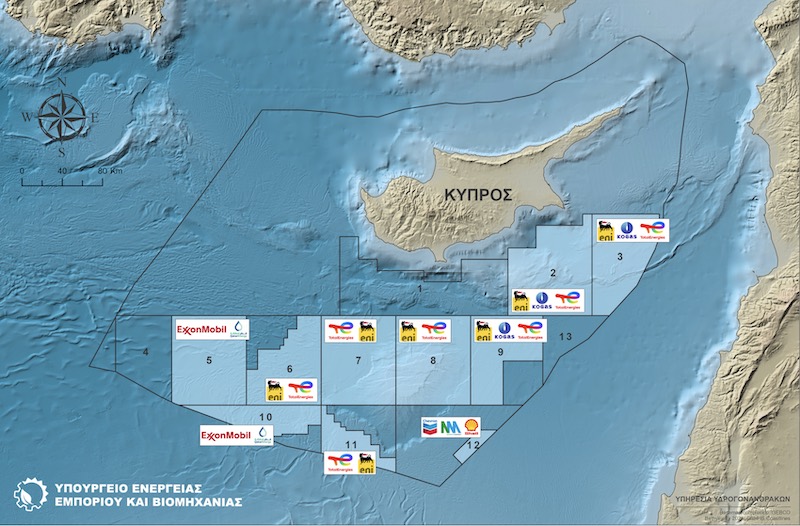
The discovery of natural gas reserves in the Cypriot Exclusive Economic Zone (EEZ) at the «Aphrodite» block in 2011 was hailed as a paramount opportunity for the radical reshaping of the Republic’s economic and geopolitical destiny. Today, in 2026, the reality remains complex. Despite the fact that estimated reserves in blocks 6, 10, and 12 (Aphrodite 2011, Calypso 2018, Glaucus 2019, Cronos 2022, Zeus 2022) reach a critical mass of 14-15 trillion cubic feet (tcf), or approximately 400-425 billion cubic meters (bcm), Cyprus remains trapped in a vicious cycle of waiting and third-party claims, with the «Aphrodite» field case being the most indicative. The prolonged pending status of the unitization agreement with Israel constitutes a serious hurdle, as the neighboring country maintains claims that complicate the Final Investment Decision (FID) and delay the commercial exploitation of the gas. However, despite the established divergence of views, significant momentum towards a final settlement is now recorded. The two countries have reached a mutually acceptable agreement to appoint an Independent Verification Body by the end of March 2026. This development marks a qualitative shift from the deadlock of interstate negotiation towards a functional, technocratic solution, as the Body’s findings will be binding for both sides. This move not only offers a way out of the long-standing stalemate but also restores the sense of security required by the international energy giants (Chevron, Shell, and NewMed Energy) for the implementation of the development and production project.
At the same time, the International Oil Companies (IOCs), driven by the logic of minimizing the initial investment costs and maximizing their own profitability, are pushing for the channeling of gas towards Egypt’s existing infrastructure. Specifically, they seek to avoid the Capital Expenditure (CAPEX) of a new infrastructure to transport natural gas to Cyprus, despite the fact that dependence on third-country infrastructure converts national capital into a perpetual Operating Expense (OPEX) for the benefit of others. While Cyprus can and should assist Cairo —which faces serious domestic adequacy problems— by directing gas from «Aphrodite» or fields adjacent to the Egyptian «Zohr» and liquefaction plants, the wholesale adoption of this approach is strategically problematic and counterproductive. It leads to a paradoxical result: Cyprus becomes a mere supplier of its own resources, conceding to Egypt the added value of liquefaction and the geopolitical leverage or strategic control over its exports. A third country will reap the transit and liquefaction fees, reducing the net revenues of the Republic of Cyprus, which will end up paying “rent” (OPEX) to Egypt on a continuous basis.
The only rational strategy for maximizing national gain is the creation of proprietary transportation infrastructure and an onshore LNG Plant at Vassilikos. We must realistically acknowledge that Cyprus cannot cover a significant percentage of the European Union’s (EU) energy needs. However, in the current juncture where the EU is seeking every possible source to diversify its energy mix away from Russia, the Cypriot contribution, though quantitatively limited, is strategically valuable. The direct export of Cypriot LNG to Europe, via Greece and the Alexandroupolis Floating Storage and Regasification Unit (FSRU), as well as the IGB interconnecting pipeline, will provide Nicosia with the necessary geopolitical leverage. Once the EU recognizes the Cypriot EEZ as a reliable, albeit complementary, pillar of its energy security, it will gain a tangible incentive to engage substantively in efforts for a just solution to the Cyprus problem and the termination of the Turkish occupation.
Part B: Vassilikos and the Need for Operational Breakthrough
The deadlock at the Vassilikos gas import terminal is a painful reminder of the consequences of administrative drift and inadequacy. The failure to deliver a critical energy infrastructure project, initially scheduled for 2022, has severely compromised the state’s institutional credibility. Consequently, Cypriot consumers bear the brunt of this delay, absorbing the staggering costs of electricity generated by high-emission fossil fuels (mazut and diesel) and the mounting carbon allowance expenditures mandated by the EU Emissions Trading System (ETS). The slippage and ultimate collapse of the contract with the Chinese consortium (CPP) does not constitute an isolated technical error, but rather the symptom of structural deficiencies in oversight and the technical proficiency of the competent authorities.
At this stage, the Republic of Cyprus must demonstrate the institutional credibility required by the circumstances. However, adherence to the legal arbitration process must not be taken as an alibi for further delays. The gap analysis of remaining and corrective works, delivered by Technip Energies in December 2025, must serve as the roadmap for the immediate restart of operations. Decision-making by ETYFA must be accelerated through urgent procedures to ensure energy security and Cyprus’s independence from the high cost of conventional energy production(1). We must adopt the model of Germany, which, in response to the energy crisis following the Russian invasion of Ukraine, developed and installed five LNG import terminals (FSRUs) in an extremely short period, mobilizing top-tier technical expertise and bypassing bureaucratic inertia with legislative licensing exemptions.
The completion of the import terminal constitutes the necessary “certificate of competence” that Cyprus must demonstrate. Initially, its operation will enable the production of cheaper and more environmentally friendly electricity; subsequently, it will pave the way for the Republic to competitively develop a scalable modular LNG station, liquefying its own gas and potentially regional resources for export. It is clear that the Vassilikos import terminal should have been designed from the outset on a combined logic with export specifications —e.g., with cryogenic-ready jetty facilities— to ensure maximum operational flexibility. The absence of an export vision in the initial 2019 tender trapped the project into a one-dimensional infrastructure, which, when a later upgrade was attempted, provided the pretext (along with other disputes regarding the pier and the FSRU vessel “Prometheus”) for the well-known legal and financial claims of the contractor (CPP). The appointment of specialized, highly qualified executives with international experience in the energy sector is now imperative to prevent the recurrence of past structural and institutional failures.
Part C: GSI, Turkish Revisionism and Greek Inertia
The Cyprus-Greece electrical interconnection via the Great Sea Interconnector (GSI), in conjunction with the development of Renewable Energy Sources (RES) and Storage Systems, constitutes the definitive answer to the island’s energy isolation. This is a project whose geopolitical and geoeconomic value exceeds its narrow economic dimension.
By extending the interconnection to Israel, the project gains a regional scope, consolidating the trilateral axis of Greece-Cyprus-Israel as the primary energy pillar of the Eastern Mediterranean. This development transforms Cyprus from an isolated energy “consumer” into a pivotal geopolitical link and a strategic bridge connecting Israel —and potentially countries with chronic electricity shortages like Lebanon— to the single European electricity market. Consequently, Cyprus is elevated to a provider of energy security for the entire Levantine Basin, enhancing its negotiating leverage vis-à-vis the European Union and effectively neutralizing Turkish efforts to isolate and marginalize the Republic.
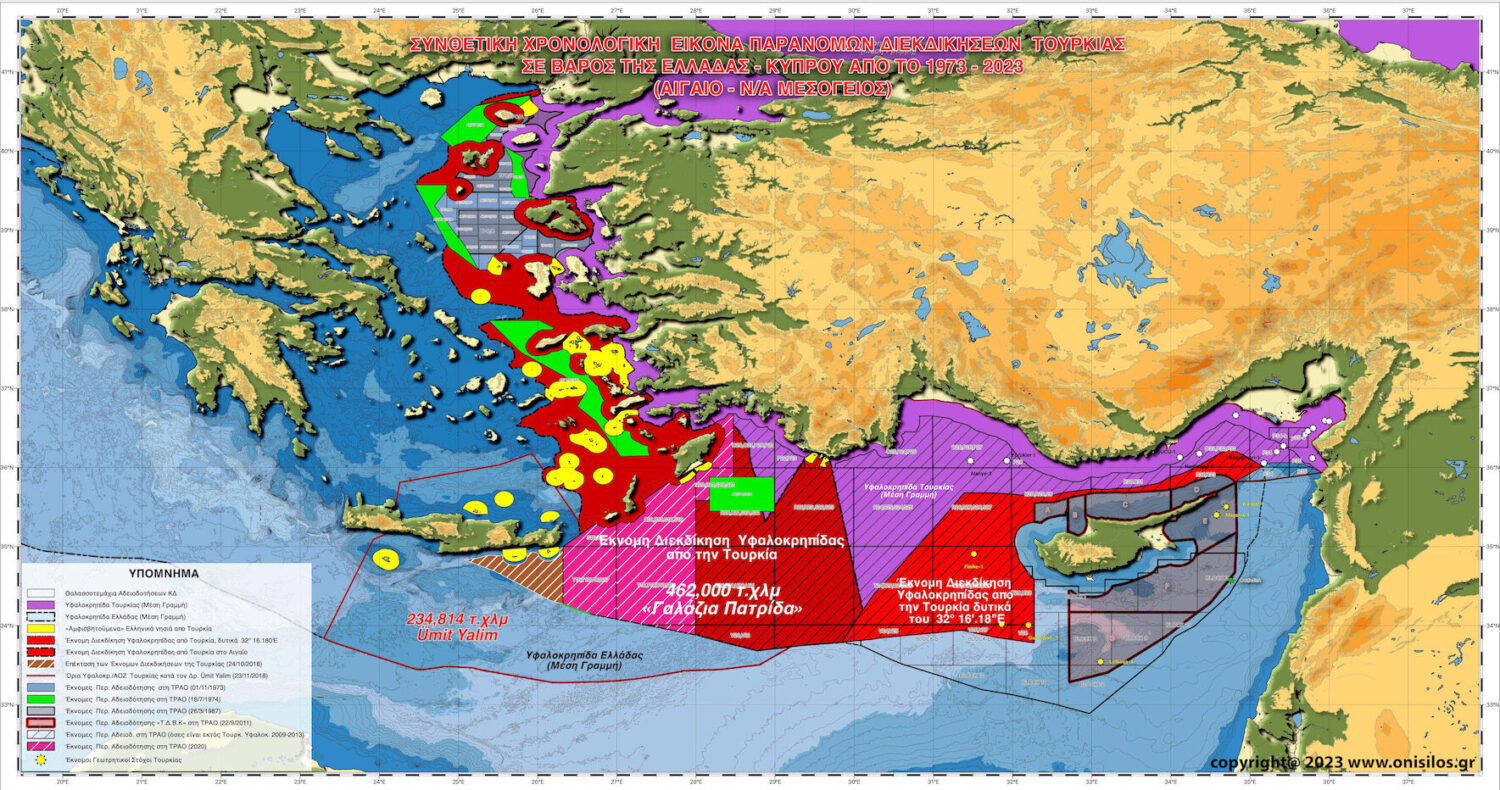
Nevertheless, despite the aforementioned strategic momentum, the project’s implementation confronts Turkish revisionism, combined with Greek hesitancy. The obstruction of survey vessels within the Greek EEZ (Kassos, Kastellorizo), alongside illegal interventions within the Cypriot EEZ by the Turkish fleet through “gunboat diplomacy”, constitute flagrant provocations that test the limits of international legality. In this context, the stance of Athens is often regarded as inadequate; the observed inertia and the failure to secure sovereign rights derived from International Law —for fear of disrupting the “good climate” or the “calm waters” with Ankara— risk evolving into a profound strategic error.
This deficient strategic response is most clearly reflected in Greece’s persistent refusal to proceed with a maritime zone delimitation agreement with the Republic of Cyprus. This delineation, which would unify the maritime space between the two states according to the provisions of the United Nations Convention on the Law of the Sea (UNCLOS), remains pending, leaving a critical geopolitical vacuum. Turkey, following a coherent long-term national policy, has rushed to exploit this very vacuum through the illegal “Turkish-Libyan Memorandum”. With this move, Ankara seeks to divide the unified Hellenic maritime space, methodically promoting the “Blue Homeland” doctrine.
Greece’s current strategic dilemma recalls historical precedents with painful consequences. The failure to substantively defend Cyprus during the 1974 Turkish invasion served as the catalyst and the trigger for the subsequent contestation of half the Aegean and the systematic challenging of Greek sovereign rights across a substantial portion of the Hellenic maritime zones. This historical experience demonstrates that Greek complacency, or worse, appeasement functions as a catalyst for the escalation of Turkish claims, given that Ankara systematically perceives moderation as weakness and restraint as retreat.
This strategic erosion manifests primarily through the operational atrophy of the Joint Defense Area Doctrine (JDAD). A robust revival of this doctrine is the only viable counter-strategy to Turkey’s efforts to geographically and strategically isolate Cyprus from Greece. Ultimately, restoring the JDAD’s credibility transcends mere military balance; it is a necessary condition and foundational prerequisite for securing major energy infrastructures, such as the Great Sea Interconnector. Without the practical projection of power and the political resolve to defend these strategic assets, any pursuit of energy autonomy remains vulnerable to Ankara’s coercive tactics, rendering the entire undertaking a hostage to the Turkish revisionist agenda.
Political realism dictates that interstate trust is not forged by signatures alone but is validated through action. Consequently, any reservations regarding the GSI are entirely justified and merit the utmost scrutiny. National vigilance is mandatory— not only against external revisionism and threats but also against the phenomenon of political capture by domestic vested interests. This necessity is underscored by the historical precedent of the Greek elites’ behavior(2) during the illegal bail-in in 2013, which targeted Cypriot bank stakeholders, including depositors, bondholders, and shareholders. That stance, which manifested despite the tangible solidarity demonstrated by Cyprus during the write-off of a significant part of the Greek public debt in 2011 (PSI), and the heavy economic burden borne for Greece’s stability, underscores the imperative to shield Cypriot interests with strict institutional and legal safeguards. Consequently, the inclusion of termination or exit clauses, which would be activated in the event of any failure to protect the project through Greek military force, must function as a vital security mechanism. The contract must explicitly provide for the full restitution of capital investment, categorized as indemnifiable costs. This would ensure the Republic of Cyprus is held harmless against both sunk expenditures and foregone economic benefits should the undertaking consortium lapse into a prolonged default, deviate from the critical path of the project execution schedule, or ultimately fail to achieve mechanical completion. By framing these expenditures as a direct liability of the implementing body, Cyprus will safeguard that its national resources are not sacrificed to a project lacking the requisite strategic “shield” for successful delivery.
Conclusion: Energy as a Catalyst for National Survival
Cyprus’s energy strategy is not a simple exercise in economic management, but the supreme act of self-determination for the Republic in the 21st century. The choice of national infrastructure over the “easy” solution of foreign terminals constitutes the dividing line between a sovereign state and a raw material provider that surrenders its energy autonomy. From the unblocking and the expedited development and monetization of our reserves, in conjunction with the creation of a national liquefaction and export infrastructure, to the rapid completion of the Vassilikos terminal and our electrical interconnection, every step is a battle against procrastination, stagnation, timidity, and Turkish intimidation.
Cyprus does not merely seek revenue; it strives to secure its rightful place on the European map as a critical, reliable, and autonomous energy partner. If we allow our country’s entire energy wealth to be liquefied in third countries, or if we succumb to projections of power and illegal coercion, we will remain hostages of our geography and strategically marginalized. If, however, we invest in technocratic upgrading, institutional capacity enhancement, and the defense of our sovereign rights, the energy capital will cease to be the “problem” and will become the solution: the lever that will push the European Union to stop focusing exclusively on the perceived “Russian threat” and to see Cyprus not as an “open wound” in the Mediterranean, but as an indispensable source of its own security. Additionally, the energy interconnection will strengthen the argument for Cyprus’s integration into the planned European “anti-drone” protection umbrella, given that the effectiveness of systems like the Israeli “Iron Dome” may be tested by saturation in the event of massive Turkish attacks.
At the crossroads of pipelines and cables, Cyprus faces a defining strategic choice: it will either consolidate its position as a pillar of future regional stability, or remain a cautionary testament to opportunity forfeited. The success of this endeavor will ultimately be measured by the Republic’s capacity to convert its energy endowment into diplomatic leverage, thereby entrenching in practice its role as the southern energy and geopolitical frontier of the West. In the contemporary strategic environment, the mere invocation of international law is no longer sufficient. What is imperative is the systematic construction of a credible deterrent architecture capable of rendering the cost of external interference —specifically from Ankara— strategically prohibitive. Only through the attainment of genuine strategic autonomy, grounded in an integrated energy system and reinforced by a robust and credible defense posture, can the Republic of Cyprus insulate itself from regional coercion and escape the constraints imposed by revisionist power politics. Against the backdrop of the violent reconfiguration of the geopolitical chessboard and the escalating intra-regional conflicts in the Middle East—now reaching the very doorstep of Cyprus—the need for strategic clarity, statecraft, and decisive state action has now become an existential imperative.
***
(1) See the Author’s Master Thesis: Tilliros, P., Cyprus Energy System and Energy Security: The Transformative Effect of Gas on the Cyprus Economy and the Energy System, University of Nicosia. Available at: https://www.researchgate.net/profile/Panayiotis-Tilliros/research
(2) See the Author’s Doctoral Thesis: Tilliros, P., Cyprus Bail-in: An Assessment of the Causes, Impact and Implications, University of Nicosia Repository. Available at:
https://repository.unic.ac.cy/archive/item/6286?lang=en
*Dr. Panayiotis Tilliros, PhD.
Economist and International Relations Analyst specializing in Geopolitics, Geoeconomics, and Energy Security.
Email: ptilliros@gmail.com
Website: www.linkedin.com/in/dr-panayiotis-tilliros-ph-d-7b817029